
Louisville Home Buying Checklist (2026): 12 Smart Steps Before You Buy
Louisville Home Buying Guide (2026): Budget, Financing & Smart Buying Checklist
Buying a home isn't just about finding a house you love.
It's about making one of the biggest financial decisions of your life.
Many buyers spend weeks looking at listings before asking an important question:
Can I comfortably afford this home after I move in?
That's the question that matters most.
In 2026, the Louisville housing market gives buyers more opportunities than it has in several years. Inventory has increased, competition has become more balanced, and sellers are generally more open to negotiations than they were during the highly competitive pandemic market. At the same time, mortgage rates remain around the mid-6% range, making budgeting and financial planning just as important as choosing the right neighborhood.
Whether you're buying your first home, relocating to Louisville, moving from Southern Indiana, or planning to stay in your next home for decades, this guide will help you make smarter decisions before you submit an offer.
Quick Answer
What should you do before buying a home in Louisville in 2026?
Start by creating a realistic monthly housing budget—not just using the maximum amount a lender approves. Then get pre-approved, compare Louisville with Southern Indiana, understand your total monthly ownership costs, research neighborhoods based on your lifestyle, and schedule a professional home inspection before closing.
The goal isn't simply buying a house.
The goal is buying a home that fits your financial future.
Key Takeaways
✅ Louisville remains one of the more affordable major metro housing markets in the Midwest, with average home values around $265,000.
✅ Housing inventory has improved compared to the previous few years, giving buyers more choices and stronger negotiating opportunities.
✅ A lender's approval amount isn't necessarily your ideal budget.
✅ Comparing monthly ownership costs is often more important than comparing listing prices.
✅ Kentucky and Southern Indiana each offer different advantages depending on taxes, commute, insurance costs, and lifestyle.
Louisville Housing Market Snapshot (2026)

Before looking at homes, it's important to understand today's market.
According to Zillow, the average home value in Louisville is approximately $265,000, with home values increasing modestly over the past year. Unlike the rapid price growth seen during 2021 and 2022, today's market has become much healthier for buyers.
Inventory has also improved significantly compared to previous years. More available homes mean buyers have additional time to compare properties, negotiate repairs, and make thoughtful decisions instead of rushing into bidding wars.
Mortgage rates remain higher than many buyers would like, averaging around the mid-6% range for a 30-year fixed mortgage. While this increases monthly payments compared to a few years ago, it has also slowed competition, creating opportunities that weren't available during the peak seller's market.
What does this mean for buyers?
Today's market rewards preparation.
Buyers who understand their finances, obtain mortgage pre-approval, and know exactly what they're looking for are often in a stronger position than those waiting for the "perfect" market.
Step 1: Calculate Your Real Monthly Budget Before Looking at Homes
One of the biggest mistakes I see buyers make isn't choosing the wrong house.
It's shopping based on the maximum amount the bank approves instead of the payment that actually fits their life.
Those two numbers can be very different.
Let's look at an example.
Example
Imagine your household earns $110,000 per year and has very little debt.
A lender may approve you for a mortgage close to $475,000.
That sounds exciting.
But let's compare two different purchase prices.
| Home A | Home B | |
|---|---|---|
| Purchase Price | $475,000 | $340,000 |
| Down Payment (10%) | $47,500 | $34,000 |
| Estimated Mortgage Payment | ~$2,700 | ~$1,900 |
| Property Taxes | ~$360/month | ~$240/month |
| Homeowners Insurance | ~$180/month | ~$140/month |
| Estimated Total Monthly Housing Cost | ~$3,240 | ~$2,280 |
That's a difference of almost $1,000 every month.
Over five years, that's nearly $60,000.
That money could instead help pay for:
- Retirement investing
- College savings
- Home renovations
- Emergency savings
- Family vacations
- Paying off other debt
The goal isn't buying the biggest home possible.
It's buying a home that still allows you to enjoy your life after the mortgage payment is made.
A Better Question to Ask
Instead of asking:
"How much house can I buy?"
Ask:
"What monthly payment allows me to sleep well at night?"
That mindset alone can prevent one of the biggest financial mistakes buyers make.
Related Reading: If you're unsure how lenders calculate affordability, read How Much Home Can You Afford in Louisville KY 2026? That guide explains how debt-to-income ratios, down payments, and monthly expenses affect your buying power and helps you choose a budget that fits your long-term goals.
Step 2: Get Pre-Approved Before You Visit Homes
Scrolling through listings is fun.
Falling in love with a home you can't confidently purchase isn't.
That's why mortgage pre-approval should happen before your first showing.
A pre-approval tells you:
- How much a lender is willing to finance
- Your estimated interest rate
- Your expected monthly payment
- Whether there are credit issues to address before shopping
It also tells sellers that you're serious.
What You'll Typically Need
Most lenders will ask for:
- Two recent pay stubs
- Last two years of W-2s or tax returns
- Two months of bank statements
- Government-issued identification
- Information about current debts
- Documentation for self-employment or bonus income, if applicable
Having these documents ready often speeds up the approval process and helps avoid surprises later.
Why This Matters
Imagine finding the perfect home in Middletown on Saturday afternoon.
You decide to think about it until Monday.
Another buyer submits an offer Sunday morning—with a pre-approval letter already attached.
Preparation often wins.
Step 3: Compare Louisville and Southern Indiana Before You Choose a Home
One of the biggest advantages of living in the Louisville metro area is that buyers aren't limited to one market.
Depending on your job, commute, lifestyle, and financial goals, buying in Southern Indiana may be just as attractive as buying in Kentucky.
But don't compare only the purchase price.
Compare your total cost of ownership.
| Factor | Louisville, KY | Southern Indiana |
|---|---|---|
| Property Taxes | Vary by county and city | Often lower in several counties |
| State Income Tax | Kentucky | Indiana |
| Home Insurance | Varies by location and home age | Varies by location |
| Commute | Depends on neighborhood | Depends on bridge access and work location |
| Home Prices | Wide variety by community | Often competitive with Louisville suburbs |
Example
Suppose you find two homes.
Home A
- Louisville
- $335,000
- HOA: $75/month
- Higher annual property taxes
Home B
- Jeffersonville
- $350,000
- No HOA
- Lower property taxes
Even though Home B costs $15,000 more, the total monthly ownership cost could actually be similar—or even lower—depending on taxes, insurance, and HOA fees.
That's why experienced buyers compare monthly ownership costs, not just listing prices.
Related Reading: If you're deciding between the two markets, explore Louisville vs Southern Indiana: Where to Buy in 2026 for a detailed comparison of taxes, commuting, affordability, and long-term ownership considerations.
Step 4: Evaluate Neighborhoods Like a Local, Not a Tourist
One of the most common questions buyers ask is:
"What's the best neighborhood in Louisville?"
The truth is, there isn't one.
The best neighborhood depends on your budget, commute, lifestyle, and long-term goals. Instead of searching for the "best" area, compare communities based on how they fit your daily life.
Here's a simplified example:
| Community | Approx. Median Home Price* | Why Buyers Consider It |
|---|---|---|
| St. Matthews | ~$360,000 | Established homes, shopping, restaurants, convenient access to downtown |
| Jeffersontown | ~$320,000 | Mix of newer and established homes, easy access to major employers |
| Middletown | ~$390,000 | Newer developments, suburban feel, growing retail |
| Shepherdsville | ~$300,000 | Larger lots, lower density, convenient access to I-65 |
| Elizabethtown | ~$340,000 | Growing community, Fort Knox access, regional employers |
| Jeffersonville, IN | ~$310,000 | Riverfront redevelopment, convenient commute to Louisville |
*Approximate market ranges. Actual prices vary by neighborhood, condition, and current inventory.
Questions to Ask Before You Buy
Instead of asking:
"Is this a good neighborhood?"
Ask:
- How long is my commute during rush hour?
- Are property taxes higher than nearby communities?
- How old are the homes?
- Is there an HOA?
- Are grocery stores, healthcare, and daily services convenient?
- If I sell in five to ten years, would this location still appeal to future buyers?
These questions are far more valuable than relying on online rankings or social media opinions.
👉 Related Reading: If you're buying your first home, explore Best Neighborhoods for First-Time Buyers in Louisville KY to compare communities based on affordability, convenience, and housing options.
Step 5: Know What You're Really Paying at Closing
Many buyers save for the down payment but forget about closing costs.
Closing costs typically range from 2% to 5% of the purchase price, depending on your loan type, lender, and transaction details.
Example: Buying a $350,000 Home
| Expense | Estimated Cost |
|---|---|
| Loan Origination & Lender Fees | $1,500–$3,000 |
| Appraisal | $500–$700 |
| Home Inspection | $400–$700 |
| Title Insurance & Closing Services | $1,000–$2,000 |
| Recording & Government Fees | $100–$300 |
| Prepaid Taxes & Insurance | Varies |
Your lender will provide a Loan Estimate outlining these costs before closing, so there shouldn't be surprises if you're reviewing the paperwork carefully.
Can Sellers Help?
In today's more balanced Louisville market, some buyers successfully negotiate:
- Seller-paid closing costs
- Home warranty coverage
- Repair credits after inspection
- Appliance inclusion
- Flexible closing dates
Every transaction is different, but stronger inventory has given buyers more negotiating opportunities than during the competitive markets of 2021 and 2022.
Step 6: What Actually Happens During a Home Inspection?
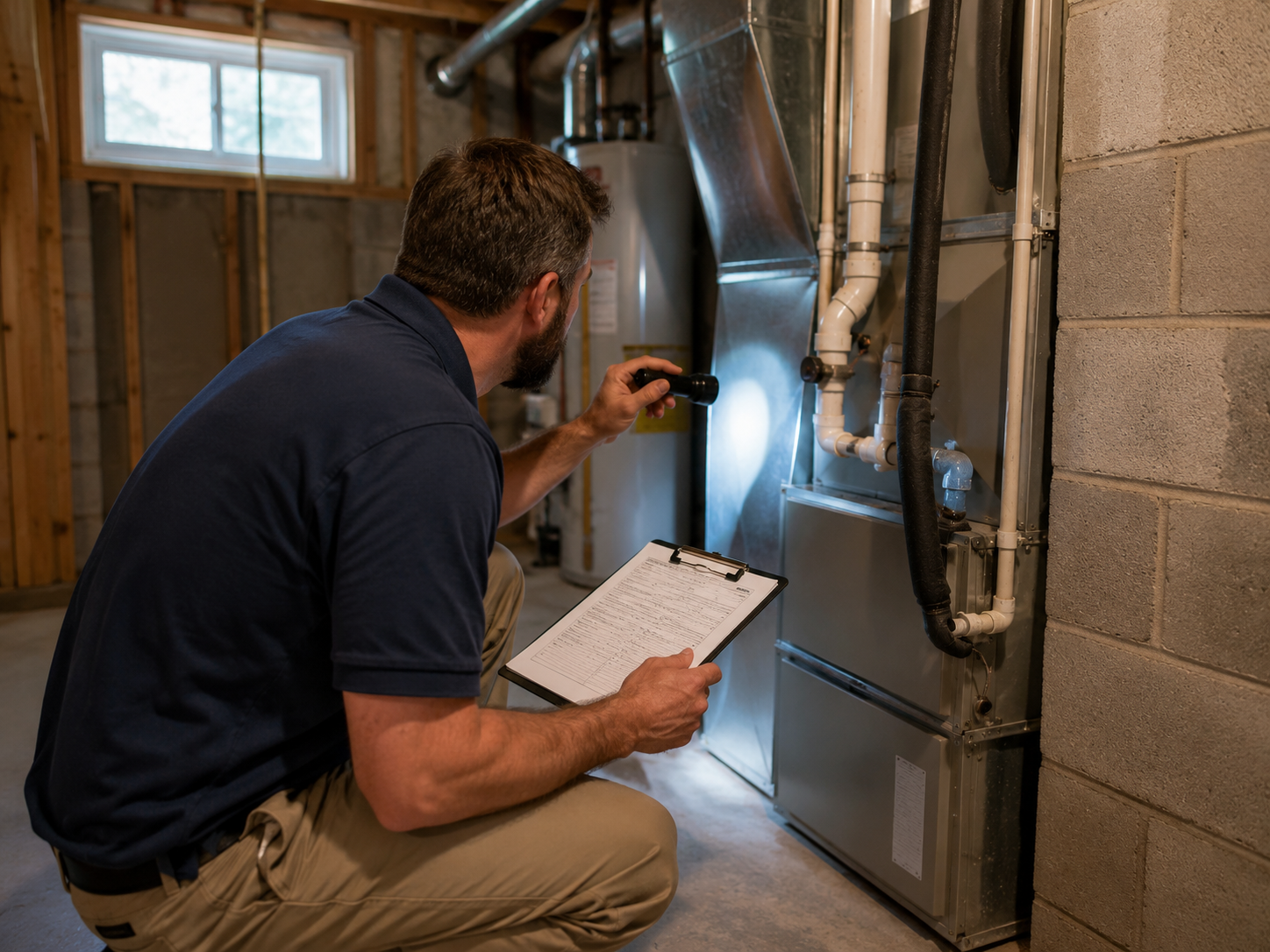
A lot of first-time buyers panic when they receive their inspection report.
Don't.
A typical inspection report might be 40 to 80 pages long, but that doesn't mean the home has major problems.
Most reports include:
- Loose electrical outlets
- Missing caulk
- Minor plumbing leaks
- Weather stripping
- Cosmetic issues
- Routine maintenance recommendations
Those items are common.
The issues that deserve closer attention are:
- Foundation movement
- Roof damage
- Electrical hazards
- Plumbing leaks inside walls
- HVAC systems nearing replacement
- Water intrusion
- Structural concerns
Example
Imagine your inspector finds:
- A water heater that's 14 years old
- A few missing shingles
- Two loose handrails
- One GFCI outlet that needs replacement
Would you walk away?
Probably not.
Instead, you might ask the seller for a repair credit or negotiate the purchase price.
A home inspection isn't designed to eliminate every home from consideration. It's designed to help you understand what you'll own after closing.
👉 Related Reading: Before your inspection, read Home Inspections Aren't Bad News | Louisville Real Estate to understand how inspection reports help buyers make informed decisions.
Step 7: Don't Make These Mistakes Before Closing
Once you're under contract, avoid making financial changes that could affect your mortgage approval.
Avoid These Common Mistakes
❌ Buying a new car
❌ Financing furniture before closing
❌ Opening new credit cards
❌ Changing jobs without talking to your lender
❌ Moving large amounts of money between accounts without documentation
Lenders often verify your financial information again before closing. A major change could delay—or even jeopardize—your loan approval.
👉 Related Reading: Learn more in Common Home Buying Mistakes in Louisville KY to avoid expensive errors before closing day.
Step 8: Your First Week After Closing
Congratulations—you have the keys.
Now what?
Here's a simple checklist for your first week as a homeowner.
Homeowner Checklist
☐ Change exterior door locks
☐ Change garage door codes
☐ Test smoke and carbon monoxide detectors
☐ Locate the water shutoff valve
☐ Replace HVAC filters
☐ Set up utilities and internet
☐ Create a home maintenance folder
☐ Review appliance manuals
☐ Walk the property after a heavy rain
☐ Schedule seasonal maintenance reminders
Completing these small tasks early can prevent larger problems later.
My Perspective
One of the biggest misconceptions I hear is:
"If the bank approves me, I can afford it."
Approval and affordability are not the same thing.
I've worked with buyers from mortgage, finance, and real estate perspectives, and I've learned that the most successful homeowners aren't necessarily the ones who buy the biggest house.
They're the ones who buy the home that allows them to continue saving, investing, traveling, and adapting as life changes.
When comparing homes, don't ask:
"What's the cheapest payment?"
Ask:
- Which home leaves room for emergencies?
- Which home supports my long-term goals?
- Which location gives me flexibility if I move in five years?
- Which purchase helps me build wealth instead of creating financial stress?
Those are the questions that lead to better decisions.
Frequently Asked Questions
Is 2026 a good time to buy a home in Louisville?
For many buyers, yes. Inventory has improved, giving buyers more options and greater negotiating flexibility than in recent years. If the monthly payment fits your budget, waiting for the "perfect" market may not provide a meaningful advantage.
Should I buy in Kentucky or Southern Indiana?
Compare total ownership costs—not just home prices. Property taxes, state taxes, insurance, commuting, and HOA fees can all affect your monthly budget.
How much should I budget for closing costs?
Many buyers should expect closing costs to range from 2% to 5% of the home's purchase price, depending on financing and transaction details.
How long does it usually take to buy a home?
Most purchases close within 30 to 45 days after an accepted offer, although your home search and financing preparation may take several additional weeks.
What's the biggest mistake first-time buyers make?
Buying based on the maximum loan approval rather than a payment that comfortably fits their long-term financial goals.
Ready to Buy a Home with Confidence?
Buying a home isn't about timing the market perfectly.
It's about making a decision that supports your financial future.
Whether you're considering Louisville, Shepherdsville, Elizabethtown, or Southern Indiana, taking time to understand your budget, financing options, neighborhood choices, and long-term ownership costs can help you buy with confidence.
If you're ready to start your home search or simply have questions about today's market, I'd be happy to help you create a strategy tailored to your goals, not just your price range.
Tamara West
📞 502-819-2211
📧 tamara@tamarawestrealtor.com
🌐 https://greaterlouisvilleliving.com/
Sources
- Zillow – Louisville Housing Market
https://www.zillow.com/home-values/12455/louisville-ky/ - Greater Louisville Association of REALTORS® Market Statistics
https://www.louisvillerealtors.com/ - Consumer Financial Protection Bureau – Buying a Home
https://www.consumerfinance.gov/owning-a-home/ - Kentucky Housing Corporation – Homebuyer Programs
https://www.kyhousing.org/ - Indiana Housing & Community Development Authority – Homeownership Resources
https://www.in.gov/ihcda/
Categories
Recent Posts










GET MORE INFORMATION